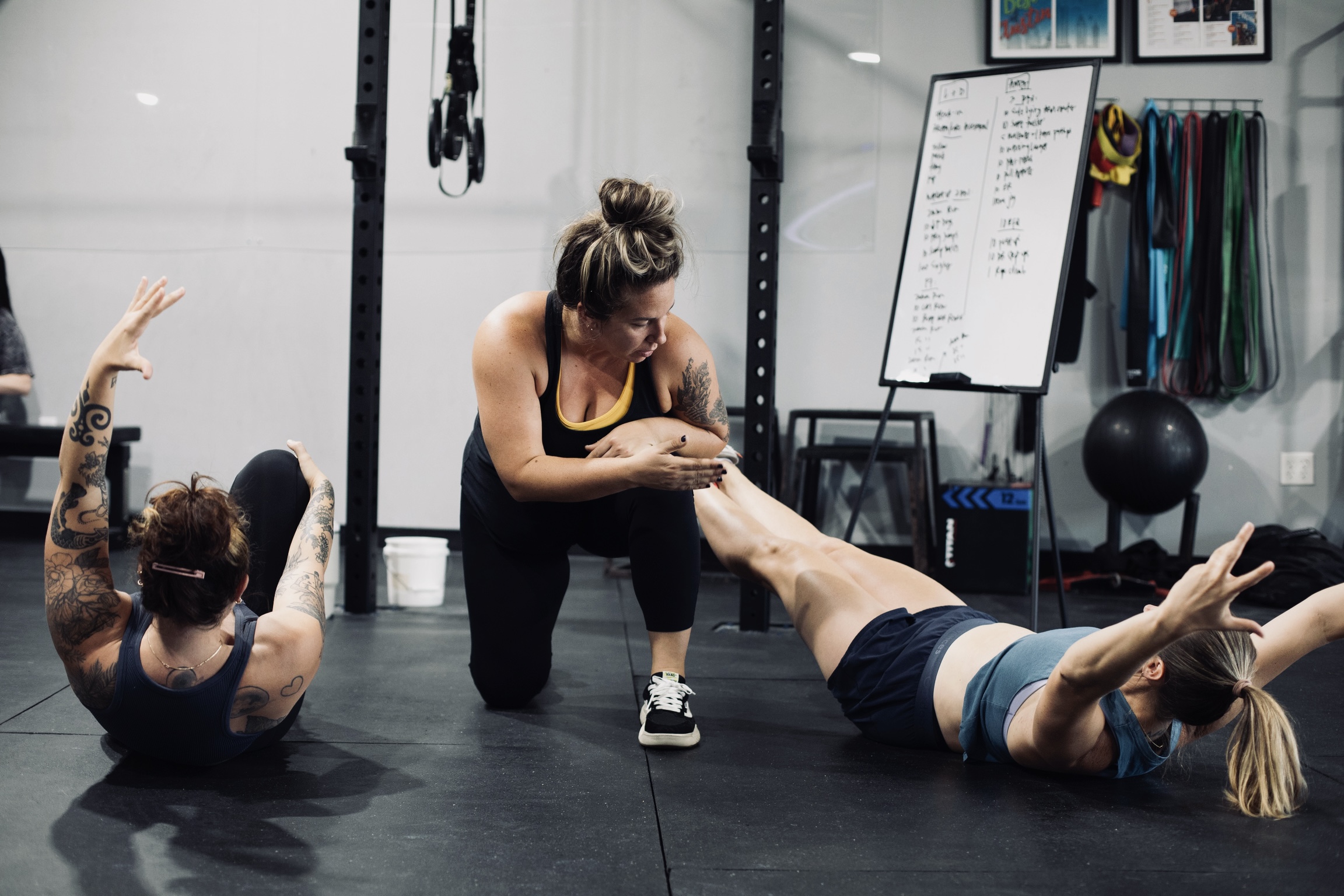

I once worked with a postpartum client who was, by any measure, an athlete. Competition shaped her life – from her childhood to her career to her hobbies. Pregnancy didn’t change her discipline or her respect for her body, it simply redirected it. She trained thoughtfully while pregnant, then committed herself to the slow, unglamorous work of postpartum recovery through our Rebuild program. Months of rebuilding strength, relearning coordination, restoring trust in a body that had fundamentally reorganized itself to grow another human.
And still, the comment she heard most often was: “You don’t even look like you had a baby.”
It’s usually said with a smile, often dripping in envy or awe. Almost always with good intentions. And yet, for many women, my client included, it lands like a quiet erasure. What frustrated her wasn’t that people noticed her strength; it was that they assumed her appearance meant effortlessness. As if her recovery had been accidental. As if her body had simply “bounced back,” rather than been rebuilt.
(Friendly reminder we are not bouncy balls.)
This is the quiet damage of appearance-based praise in the postpartum period. Even when positive, it reduces one of the most complex physiological processes a human can undergo to an aesthetic outcome. It frames childbirth as something a woman should ideally leave no visible trace of, rather than something that fundamentally changes her – down to the cellular level.
Pregnancy is not a cosmetic event. It is a full-system overhaul.
A pregnant body increases blood volume by nearly 50%. Organs shift. Ligaments soften. The pelvic floor bears sustained load for months, then must yield to delivery – sometimes stretching beyond recovery, sometimes tearing. The abdominal wall thins and separates to make space for a growing uterus. The nervous system recalibrates. Hormones rise, crash, and surge again, influencing mood, sleep, cognition, and pain perception.
Then comes birth: an acute physical stressor layered on top of months of cumulative strain. Whether vaginal or surgical, delivery is a trauma event in the literal sense of the word. Tissue is stretched, cut, sutured, inflamed. Blood is lost. Energy reserves are depleted. The brain itself changes structure during pregnancy and postpartum to support caregiving.
And recovery does not begin when the baby is born, rather, it collides head on with sleep deprivation, feeding demands, and the emotional weight of keeping this new precious goblin alive.
So when someone says, “You don’t even look like you had a baby,” they’re only commenting on the tip of the iceberg. But what they often miss is everything that doesn’t show; everything underneath.
They miss the hours spent relearning how to breathe without bearing down. The tedious rehab of reconnecting to deep core muscles that no longer fire automatically. The pelvic floor exercises done between diaper changes and unpredictable naptimes. The mental work of reconciling a new identity with an old one. The patience required to heal in a culture that glorifies speed and minimization.
They miss the grief some women carry for bodies that feel unfamiliar, even when they are strong. They miss the courage it takes to inhabit a changed body without apology.
And perhaps most importantly, they miss the accomplishment.
Because carrying, delivering, and recovering from a baby is not something to disguise – it is something to recognize.
A woman’s postpartum body is not a before-and-after photo. It is evidence of adaptation, resilience, and labor – much of which is buried or invisible. Whether her body looks “unchanged” or unmistakably transformed tells you almost nothing about what she has endured or achieved.
If we truly want to support mothers, we need to shift the focus. Instead of commenting on how little they appear affected, we might acknowledge the magnitude of what they’ve just done. Here are some suggested script options the next time you feel compelled to comment on her cake:
Respect that recovery is not linear, not aesthetic, and not owed to anyone’s gaze.
Because the real story of postpartum isn’t written on the surface of a woman’s body; it’s written in what that body has carried, survived, and rebuilt.
.jpeg)





.jpg)





.jpg)

%20Large.jpeg)







.jpeg)


